Where to Find Sloths in Costa Rica (and How to Watch Them Like a Local)
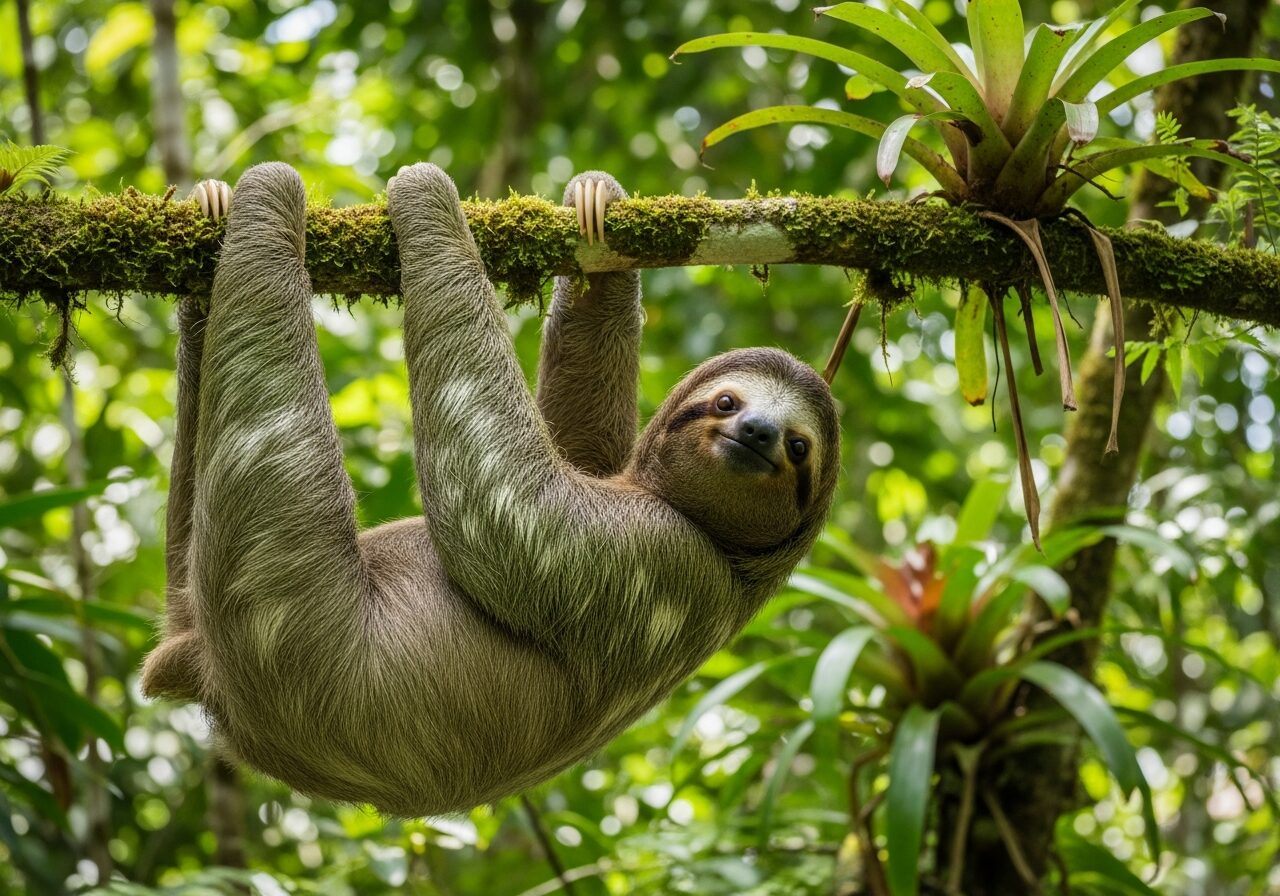
Few experiences feel as quintessentially Costa Rican as spotting your first wild sloth. As a guide born here, I get asked one question more than any other: 'Scheyla, where can we actually see them?' Here's exactly where I take my guests — and the small details that make the difference between a blurry maybe and a face-to-face moment you'll remember forever.
Costa Rica is home to two species: the brown-throated three-toed sloth, which is the smiley-faced one you see on every postcard, and Hoffmann's two-toed sloth, which is a bit shaggier, more nocturnal, and surprisingly fast (for a sloth).
The best regions for sloth spotting
Manuel Antonio National Park on the central Pacific coast is the most reliable place in the country. Three-toed sloths often hang in the cecropia trees right above the main trail — sometimes within ten feet of you. Go right at opening time (7am) before the day-trippers from San José arrive.
Cahuita and Puerto Viejo on the Caribbean side are quieter and feel wilder. Two-toed sloths are visible in the canopy at dawn, and the Jaguar Rescue Center near Puerto Viejo runs ethical rehabilitation tours where you'll learn more about sloth biology than anywhere else.
La Fortuna and the Arenal area have great sloth sightings on quiet rainforest trails like the Bogarín Trail — locally owned, low crowds, and an almost guaranteed sighting because the guides know each individual sloth on the property.
Our family farm in Guanacaste sees regular sloth visitors, and you'll have the trail almost entirely to yourself. This is the option I most often recommend to guests who want something off the main tourist circuit.
When to look up
Sloths move most around sunrise and just before dusk. The midday heat puts them into a deep nap high in the canopy where they're nearly invisible — they curl into a ball and look exactly like a clump of leaves or a termite nest.
Bring binoculars. I cannot say this strongly enough. Even a cheap pair transforms the experience. Look for a 'lump' that doesn't quite match the shape of the leaves around it, then watch for slow movement.
Rainy season (May through November) is actually better for sloth-spotting than the dry season. The forest is more active, and sloths come down lower in the canopy to feed on new growth.
Please don't touch
Sloths are wild animals with sensitive skin and slow immune systems. Any 'sloth selfie' operation that lets you hold one is harming the animal — the stress can be fatal within months. Reputable sanctuaries never allow handling.
The good news: a respectful, distant view is even more magical. There is nothing like watching a mother sloth slowly reach out for a leaf while her baby clings to her chest. That image stays with you.
What I include on my sloth tours
When you book a sloth-focused day with me, you get an early start (5:30am pickup), high-quality binoculars provided, breakfast at a local soda, and a guarantee: if we don't see a sloth, I'll bring you back another morning for free. In fifteen years I've only had to honor that promise twice.